
This article is based on agricultural insights and a presentation by an Adventist sister in faith from Australia.
Introduction
The Parable of the Tares among the Wheat appears straightforward at first glance, yet it contains nuances that can easily be overlooked. In this article, we will examine the parable more closely and draw practical applications from it.
Matthew 13:24-30,36-43 – Another parable put he forth unto them, saying, The kingdom of heaven is likened unto a man which sowed good seed in his field: But while men slept, his enemy came and sowed tares among the wheat, and went his way. But when the blade was sprung up, and brought forth fruit, then appeared the tares also. So the servants of the householder came and said unto him, Sir, didst not thou sow good seed in thy field? from whence then hath it tares? He said unto them, An enemy hath done this. The servants said unto him, Wilt thou then that we go and gather them up? But he said, Nay; lest while ye gather up the tares, ye root up also the wheat with them. Let both grow together until the harvest: and in the time of harvest I will say to the reapers, Gather ye together first the tares, and bind them in bundles to burn them: but gather the wheat into my barn. / {36} Then Jesus sent the multitude away, and went into the house: and his disciples came unto him, saying, Declare unto us the parable of the tares of the field. He answered and said unto them, He that soweth the good seed is the Son of man; The field is the world; the good seed are the children of the kingdom; but the tares are the children of the wicked one; The enemy that sowed them is the devil; the harvest is the end of the world; and the reapers are the angels. As therefore the tares are gathered and burned in the fire; so shall it be in the end of this world. The Son of man shall send forth his angels, and they shall gather out of his kingdom all things that offend, and them which do iniquity; And shall cast them into a furnace of fire: there shall be wailing and gnashing of teeth. Then shall the righteous shine forth as the sun in the kingdom of their Father. Who hath ears to hear, let him hear.
An Example of the Tares
The parable uses agricultural realities as symbols for spiritual truths. It is therefore helpful to begin with examples from farming — particularly because in the time of Jesus, far more people were familiar with agriculture and thus immediately understood the figurative language. The first task is to identify the tares from Matthew 13:24–30 in the following pictures.
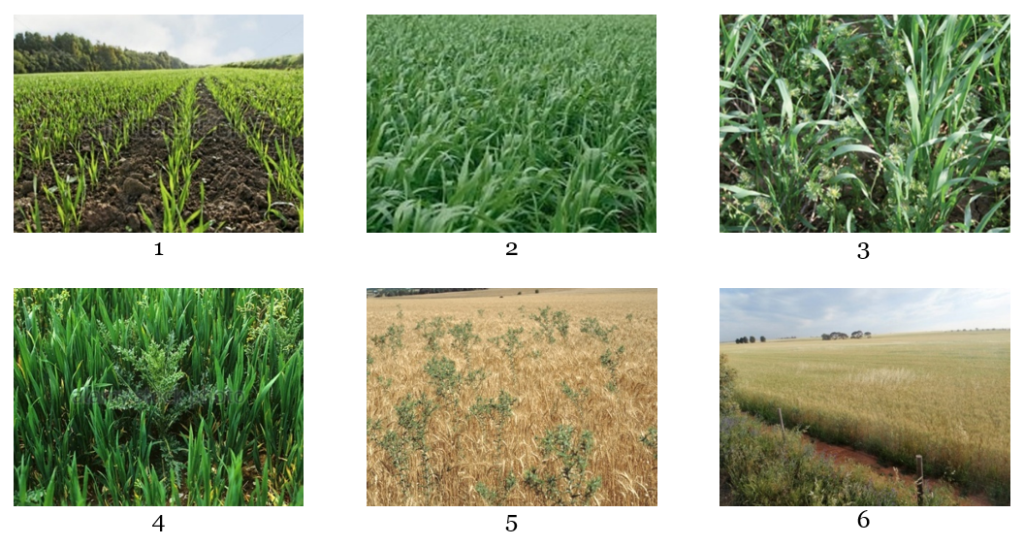
Which pictures show the tares? Is it picture number 4 — or perhaps number 5?
In the East, men sometimes took revenge upon an enemy by strewing his newly sown fields with the seeds of some noxious weed {tares} that, while growing, closely resembled wheat. Springing up with the wheat, it injured the crop and brought trouble and loss to the owner of the field. So it is from enmity to Christ that Satan scatters his evil seed among the good grain of the kingdom. The fruit of his sowing he attributes to the Son of God. {EGW, COL 71.1}
If you chose pictures 3, 4, or 5, you are unfortunately wrong — that would be too easy. Whether the tares are visible in pictures 1 and 2 cannot be said with certainty. In picture 6, however, we can clearly identify them. In Matthew 13:26 we read that the tares only became visible once “the blade was sprung up, and brought forth fruit.” Why only at this later stage? Because the plant described here as tares closely resembles wheat in its early growth stages and can only be distinguished shortly before maturity.
Pictures 3, 4, and 5 therefore do not show the tares plant described in the parable, but rather other harmful plants — such as the “Blue Poppy,” or Mexican Poppy, the Scotch Thistle, or the Saffron Thistle. These plants bear no resemblance to wheat whatsoever: from the moment their first leaves appear, they can be easily identified and clearly distinguished — especially the so-called “Blue Poppy,” more accurately: the Mexican Poppy.
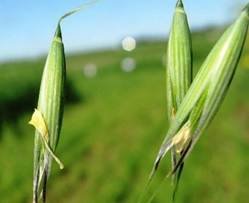
In the picture above we see the black oat, also known as sand oat, wild oat, or bristle oat. The distinctive black tips at the end of the grain head are noteworthy. This plant fits the description of the tares in the parable well — even though this does not necessarily mean that exactly this species is meant.
The black oat is not very nutritious for animals and does not yield enough grain to be commercially useful. Its kernels are therefore considered a contaminant among the wheat kernels. When the father of an Adventist sister in faith from Australia brought his grain to the local silo, a sample was taken from the middle of the grain heap — a long pipe was inserted into the grain bin on the truck and a sample was drawn out. This was then analyzed to assess the “cleanliness” of the load. Depending on the amount of black oat or weed seeds found in the sample, the payment amount was determined. For this reason, many farmers spray their fields with herbicides before or during sowing.
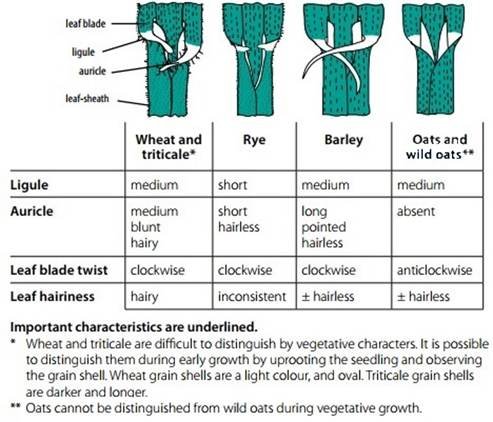
Only the trained eye of a qualified agronomist can detect this infiltrator in the first two of the six pictures. Noteworthy is the distinctive way in which the leaves are attached to the main stem. To distinguish between wheat and black oat, every single plant in the field would have to be examined closely. Let us now take a careful look at the following picture showing the distinguishing characteristics of the respective grain plants — bear in mind: in reality, these differences are only visible on a very small scale in the field.
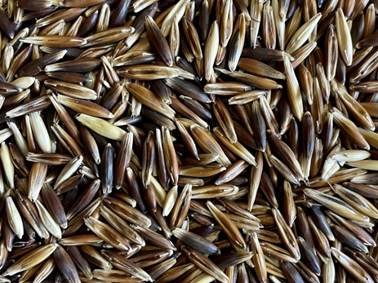
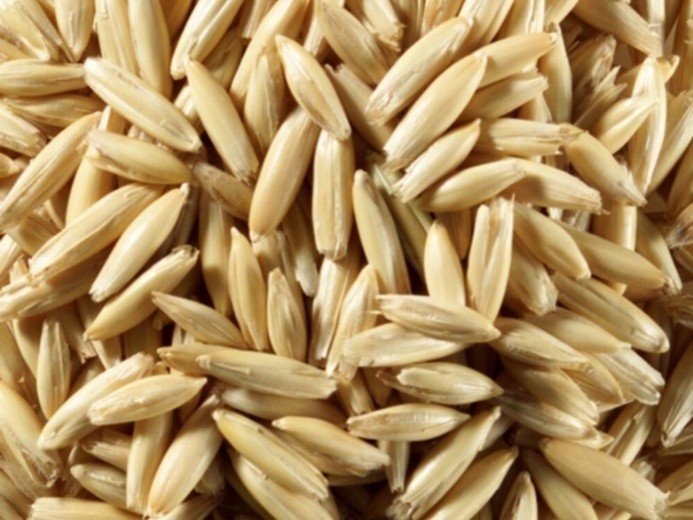
In the first of the two pictures above we see the grain of the black oat, and in the second the grain of commercially grown wheat. The difference is clear: one appears relatively empty, while the other is well filled.
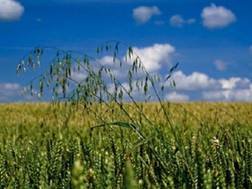
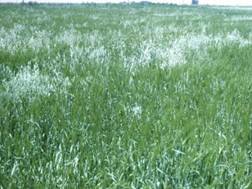
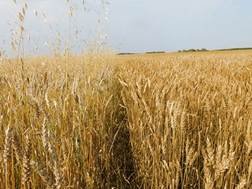
Black oat grows directly alongside the wheat plants and at approximately the same rate. The plant is therefore difficult to identify for most of the time, until the grains begin to ripen. Then a clear difference becomes apparent: the heads of the black oat suddenly protrude far above those of the wheat. When looking across the field at the level of the wheat heads, the heads of the black oat are clearly visible. The pictures above illustrate this well. In the middle picture, the heads of the black oat appear white, indicating that they have already shed their seeds.
Tares or Thorns
In many Bible translations the Greek word ζιζάνια (zizania) is rendered as “tares.” It appears exclusively in Matthew 13 in the Parable of the Tares. A footnote is often found explaining that this refers to the “darnel” or ” ryegrass” — a poisonous plant that closely resembles wheat. The black oat described above exhibits a similar deception, as it too closely resembles wheat. Where darnel is not a widespread problem in a particular part of the world, the black oat or another harmful plant takes its place. Thus there exist different kinds of “false wheat.”
Thus the biblical definition of tares in Matthew 13:24–30 is clear to us: a plant that closely resembles wheat — practically a false wheat. The harmful plants that we saw earlier in pictures 3, 4 and 5 will henceforth be referred to in this article as “thorns,” in order to ensure a clear distinction from the tares.
The word “thorns” is not used directly for people in the New Testament — but rather for circumstances, as for example in the Parable of the Sower — however in the Old Testament it is indeed applied to people as well (cf. Numbers 33:55; Joshua 23:13). Furthermore, many other agricultural images for ungodly people are found in the New Testament: bad trees (Matthew 7:17–19; Jude 12), bad vines (John 15:6; Isaiah 5:1–7; Ezekiel 15:2–4) or chaff (Matthew 3:12). Nevertheless, for the sake of simplicity we will confine ourselves in this article to the term “thorns.”
A crucial question now arises: what relevance do these agricultural insights have for spiritual truths? It is precisely this question that we will explore in the following sections.
The Scope of Application
It is very important to understand to which situation(s) the teachings from the Parable of the Tares among the Wheat can and should be applied. What is Jesus speaking about? Is he speaking about the world as a whole? The Bible states the following in Matthew 13:38: “The field is the world.” With this quotation one could consider the matter settled. However, a problem arises from this.
Is it really the case in the world that no recognizable difference exists between the good seed — the children of the kingdom — and the tares — the children of the wicked one (Matthew 13:26, 38)? Hopefully not, for in that case we as God’s people would be failing our calling: to be different and to be a light for a world that lives in darkness (1 Peter 2:9; Romans 12:2; Galatians 5:19–22). In fact, a clear difference exists between the children of light and those of darkness (Matthew 5:14–16; Ephesians 5:8; Philippians 2:15).
Does this mean that Jesus incorrectly identified the field as “the world”? No — rather, an important lesson can be drawn from this: God does not yet judge the world finally in his mercy, because he wants to give people time to repent.
Matthew 5:45 – That ye may be the children of your Father which is in heaven: for he maketh his sun to rise on the evil and on the good, and sendeth rain on the just and on the unjust.
2 Peter 3:9 – The Lord is not slack concerning his promise, as some men count slackness; but is longsuffering to us-ward, not willing that any should perish, but that all should come to repentance.
Some interpret the parable correctly as referring to the world, but fail to present the deeper spiritual truth (see for example the SDA Sabbath School lesson for Q1 2025, Lesson No. 9: “The Cosmic Conflict”).
The quote from Ellen G. White, which was only partially reproduced at the beginning, makes clear that the parable should be applied to the church of God. In full it reads as follows:
In the East, men sometimes took revenge upon an enemy by strewing his newly sown fields with the seeds of some noxious weed {tares} that, while growing, closely resembled wheat. Springing up with the wheat, it injured the crop and brought trouble and loss to the owner of the field. So it is from enmity to Christ that Satan scatters his evil seed among the good grain of the kingdom. The fruit of his sowing he attributes to the Son of God. By bringing into the church those {tares} who bear Christ’s name while they deny His character, the wicked {Satan} one causes that God shall be dishonored, the work of salvation misrepresented, and souls imperiled. {EGW, COL 71.1}
As opposed to the attempt to relate it only to the world, another extreme consists in applying the parable exclusively to the church without also taking into account the existence of the thorns. It is heard more and more frequently that judgment is solely God’s affair and that the church — since it cannot look into hearts — should apply the Parable of the Tares to the handling of sin and apostasy in its ranks. Today it is often demanded that people who live openly in sin — even in leadership positions — must be accepted as they are. It is true that judgment is ultimately God’s task and that only he knows the heart, however this application of the parable would be misleading. For it would contradict the clear biblical instruction on how to deal with open sin in the church — as is made clear among others in the following Bible passages: 1 Corinthians 5:11–13; Matthew 18:15–17; 2 Thessalonians 3:6, 14–15; Titus 3:10–11; Romans 16:17.
This issue makes clear, firstly, that within the church a distinction must be made between tares and thorns: the tares can only be distinguished from the wheat with difficulty, whereas thorns are easily recognizable. Secondly, the “field” is therefore not exclusively the church — for then we would be disregarding Jesus’ clear statement “The field is the world” (Matthew 13:38).
“The field,” Christ said, “is the world.” But we must understand this as signifying the church of Christ in the world. The parable is a description of that which pertains to the kingdom of God, His work of salvation of men; and this work is accomplished through the church. True, the Holy Spirit has gone out into all the world; everywhere it is moving upon the hearts of men; but it is in the church that we are to grow and ripen for the garner of God. {EGW, COL 70.2}
The explanation would therefore be that the field represents the church in the midst of this world. The word “field,” as used in the Parable of the Tares, refers in other places generally to agriculturally used land (the countryside as opposed to the city; Mark 5:14), or in individual cases to a farm (Matthew 22:5; see KJV). The “field” therefore means “the land” — it represents the world. On this land there are various fields or plots — these are the churches, organizations and the like that exist on earth. On these fields grows the wheat, which despite possible differences follows God together to the best of its knowledge and conscience and thus represents the spiritual church of God. Among these is the field of the householder, which represents his chosen and true church on this earth. The enemy has scattered his seed — above all also on the fields with the wheat. Added to this are the thorns, which are not mentioned in the Parable of the Tares, but are standardly present everywhere (when the fields are not treated with herbicides) and which we have already examined and defined above.
There is therefore a dual meaning in this parable: on the one hand, on a surface level, it refers to the whole world, and on the other hand, in a deeper sense, to the church.
The question that arises next is how to deal with the various plants on the respective soils.
Dealing with the World
1 Corinthians 5:12-13a – For what have I to do to judge them also that are without [outside the church]? do not ye judge them that are within? But them that are without God judgeth.
Regardless of whether it concerns tares or thorns, it is not the task of the church of God to take action against people in the world in any way. Against unbelievers and sinners we can of course wage no worldly, physical struggle or war (Ephesians 6:12). Our struggle is spiritual: we can only influence them positively and bear witness (Acts 1:8; 1 Peter 3:15).
Dealing with the Tares
In the parable of the wheat and the tares, we see the reason why the tares were not to be plucked up; it was lest the wheat be rooted up with the tares. Human opinion and judgment would make grave mistakes. But rather than have a mistake made, and one single blade of wheat rooted up, the Master says, “Let both grow together until the harvest;” then the angels will gather out the tares, which will be appointed to destruction. Although in our churches, that claim to believe advanced truth, there are those who are faulty and erring, as tares among the wheat, God is long-suffering and patient. He reproves and warns the erring, but he does not destroy those who are long in learning the lesson he would teach them; he does not uproot the tares from the wheat. Tares and wheat are to grow together till the harvest; when the wheat comes to its full growth and development, and because of its character when ripened, it will be fully distinguished from the tares. The church of Christ on earth will be imperfect, but God does not destroy his church because of its imperfection. {RH September 5, 1893, par. 1a}
There have been and will be those who are filled with zeal not according to knowledge, who would purify the church, and uproot the tares from the midst of the wheat. But Christ has given special light as to how to deal with those who are erring, and with those who are unconverted in the church. There is to be no spasmodic, zealous, hasty action taken by church-members in cutting off those they may think defective in character. Tares will appear among the wheat; but it would do more harm to weed out the tares, unless in God’s appointed way, than to leave them alone. While the Lord brings into the church those who are truly converted, Satan at the same time brings persons who are not converted into its fellowship. While Christ is sowing the good seed, Satan is sowing the tares. There are two opposing influences continually exerted on the members of the church. One influence is working for the purification of the church, and the other for the corrupting of the people of God. {RH September 5, 1893, par. 1b}
Christ’s servants are grieved as they see true and false believers mingled in the church. They long to do something to cleanse the church. Like the servants of the householder, they are ready to uproot the tares. But Christ says to them, “Nay; lest while ye gather up the tares, ye root up also the wheat with them. Let both grow together until the harvest.” {COL 71.2}
Christ has plainly taught that those who persist in open sin must be separated from the church, but He has not committed to us the work of judging character and motive. He knows our nature too well to entrust this work to us. Should we try to uproot from the church those whom we suppose to be spurious Christians, we should be sure to make mistakes. Often we regard as hopeless subjects the very ones whom Christ is drawing to Himself. Were we to deal with these souls according to our imperfect judgment, it would perhaps extinguish their last hope. Many who think themselves Christians will at last be found wanting. Many will be in heaven who their neighbors supposed would never enter there. Man judges from appearance, but God judges the heart. The tares and the wheat are to grow together until the harvest; and the harvest is the end of probationary time. {COL 71.3}
The handling of the tares is clear: since we cannot distinguish them from the wheat with certainty, we are to leave them in the church. God can in his mercy and power transform the tares into wheat — if the person concerned is willing. However, if the church were to uproot the tares, these people would have no chance to enter into full fellowship with other brothers and sisters in faith and to grow with their help.
There have been and always will be tares among the wheat, the foolish virgins with the wise, those who have no oil in their vessels with their lamps. There was a covetous Judas in the church Christ formed on earth, and there will be Judases in the church in every stage of her history. But because there are such, it does not do away with the fact that God has a church. There were murmurers, envious and jealous ones in the tribes of Israel, journeying to the promised Canaan; but, notwithstanding, God led them by a pillar of cloud by day and a pillar of fire by night. The deceitful hearts of individuals will lead them astray because they see imperfections in the church, but these very ones have defective characters that they do not discern. These very ones are capable of being useful in the church were they connected with the great Head of the church. But if they choose to be presumptuous, and in self-sufficiency draw off on some tangent, the church will move on without them. Every member of the church is bound by the most solemn vow to advance its interests and to labor unselfishly and devotedly for its success. {ST October 23, 1879, par. 10}
Jesus knew that Judas was defective in character, but notwithstanding this, he accepted him as one of the disciples, and gave him the same opportunities and privileges that he gave to the others whom he had chosen. Judas was left without excuse in the evil course he afterward pursued. Judas might have become a doer of the word, as were eventually Peter and James and John and the other disciples. Jesus gave precious lessons of instruction, so that those who were associated with him might have been converted, and have no need of clinging to the defects that marred their characters. {RH September 5, 1893, par. 2}
Subtle blemishes, hidden sins and weaknesses of character — as in the case of Judas Iscariot — are often not recognizable up to a certain point. And even when we do perceive them, we should nevertheless give the person concerned opportunities for repentance — just as Jesus did with Judas. But what is to be done when it concerns open sin against God or fellow brothers and sisters in faith?
Dealing with the Thorns
1 Corinthians 5:11-13 – But now I have written unto you not to keep company, if any man that is called a brother be a fornicator, or covetous, or an idolator, or a railer, or a drunkard, or an extortioner; with such an one no not to eat. For what have I to do to judge them also that are without [of the church]? do not ye judge them that are within? But them that are without God judgeth. Therefore put away from among yourselves that wicked person.
Matthew 18:15-17 – Moreover if thy brother shall trespass against thee, go and tell him his fault between thee and him alone: if he shall hear thee, thou hast gained thy brother. But if he will not hear thee, then take with thee one or two more, that in the mouth of two or three witnesses every word may be established. And if he shall neglect to hear them, tell it unto the church: but if he neglect to hear the church, let him be unto thee as an heathen man and a publican.
2 Thessalonians 3:6,14-15 – Now we command you, brethren, in the name of our Lord Jesus Christ, that ye withdraw yourselves from every brother that walketh disorderly, and not after the tradition which he received of us. / {14} And if any man obey not our word by this epistle, note that man, and have no company with him, that he may be ashamed. Yet count him not as an enemy, but admonish him as a brother.
Christ has plainly taught that those who persist in open sin must be separated from the church … {COL 71.3}
The church does injustice to God when it allows to exist as part of itself elements that are bringing dishonor to his cause. In the responsibilities God has laid upon his church, he gives to each individual a part to act, with encouragement to draw upon the wisdom of God for his help. But there are those who depart from the way of the Lord, and who take sides with the tempter and his sympathizers; and there should be those in the church who in the fear of God will act with justice and righteousness and faithfulness in administering reproof. {RH March 19, 1908, par. 17}
It is far easier to allow matters in our important institutions to go in a lax, loose way, than to weed out that which is offensive, which will corrupt and destroy confidence and faith. But it would be far better to have a smaller number of workers, to accomplish less, and as far as possible, to have these who are engaged in the work true-hearted, firm as rock in principle, loving the whole truth, obedient to all the commandments of God. The white-robed ones who surround the throne of God, are not composed of that company who were lovers of pleasure more than lovers of God, and who choose to drift with the current rather than to breast the waves of opposition. All who remain pure and uncorrupted from the spirit and influence prevailing at this time, will have stern conflicts. They will come through great tribulation; they will wash their robes of character, and make them white in the blood of the Lamb. These will sing the song of triumph in the kingdom of glory. Those who suffer with Christ will be partakers of his glory. {RH October 16, 1883, par. 21}
Open sinners are like thistles and thorns — they are easily recognizable. No trained eye is required to identify the following thistles.
Note: The following pictures and in part also the texts in this and the next section are taken from the presentation of an Adventist sister in faith from Australia.
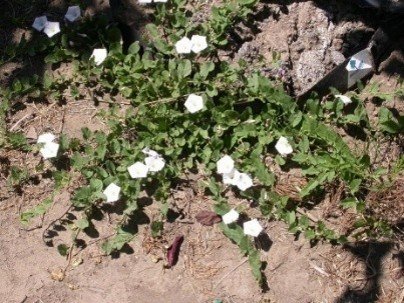 | Plants such as bindweed are easily recognizable. It is difficult to remove bindweed from wheat, as the seeds are of a similar size. It is also a host for viruses of potatoes, tobacco and tomatoes. It is a host for some insects and nematodes of agricultural significance. |
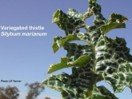 | Variegated Thistle |
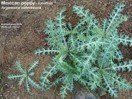 | Mexican Poppy — young |
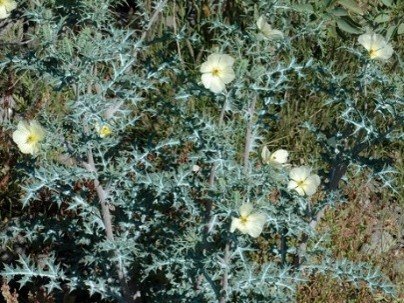 | Mexican Poppy — mature |
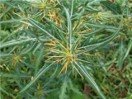 | Bathurst Burr |
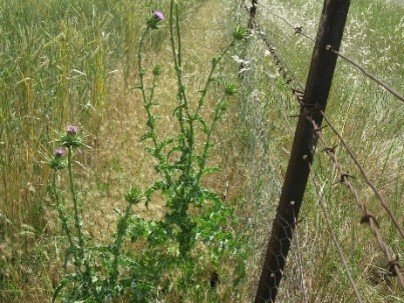 | This is a Variegated Thistle (with black oat) in a wheat field near Barraba, New South Wales (NSW), Australia. It is very easy to distinguish the thistle from the wheat. |
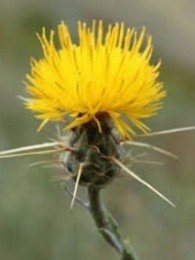 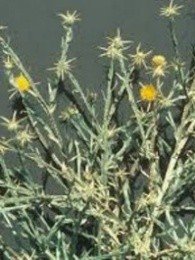 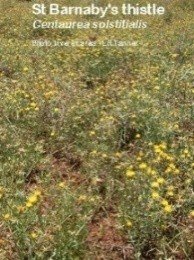 | St Barnaby’s Thistle (commonly, but incorrectly, called Star Thistle) |
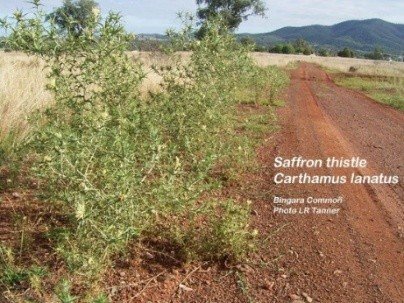 | Saffron Thistle near Bingara, NSW, Australia. Again, no trained eye is required to identify this thistle. |
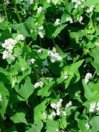 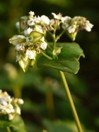 | Buckwheat is a useful plant, but not as part of the wheat harvest. |
The Influence of the Tares on the Wheat
The fact that the tares must be left in the church does not mean that the negative influences arising from this cannot be recognized and, where necessary, contained. The following is a list of the influences that the black oat exerts on the wheat. However, the practical applications to the social and spiritual environment of the church that can be derived from these agricultural insights will not be treated in detail in this article.
- Black oat stubble is allelopathic. Allelopathy is a biological phenomenon in which an organism produces one or more biochemicals that influence the germination, growth, survival and reproduction of other organisms. Root exudates from black oat inhibit the root and leaf growth of wheat — the tares harm the wheat.
- The staggered emergence of the black oat during most of the cool growing season, its ability to ripen quickly, as well as its tendency to shed seeds rapidly, make it a difficult weed to control.
- In early harvested crops, up to 75% of the black oat seeds can be taken in by the harvester. In a later harvest, on the other hand, very few seeds are harvested along with it. A later harvest is therefore more advantageous — as is also depicted in the parable.
- Harvesters can spread the seeds of the black oat up to 250 metres from the parent plant. A premature harvesting of the tares is therefore counterproductive, as it additionally promotes their spread.
- The persistence of the black oat is mainly due to new seed being produced each year — rather than dormancy, through which the seed survives in the soil from one season to the next. Expressed practically: the tares do not survive because they persist over the years (in the church), but because they constantly reproduce.
- Deep burial of the seed prevents the germination of the black oat, but induces dormancy. Thus the seeds can nevertheless germinate in later years when they are brought to the surface. Shallow burial, on the other hand, considerably promotes the germination of the black oat. This means: superficiality (in the church) favours the spread of the tares.
- Burning of the field area can destroy the seed on the soil surface and reduce the dormancy of the remaining seed. Burning is most effective when carried out immediately after the harvest. Here too it becomes apparent that the parable very aptly reflects the agricultural realities by speaking of fire and burning.
The Harvest
I then saw the third angel. Said my accompanying angel, “Fearful is his work. Awful is his mission. He is the angel that is to select the wheat from the tares, and seal, or bind, the wheat for the heavenly garner. These things should engross the whole mind, the whole attention.” {EW 118.1}
The third angel is represented as following the first and second angels, and crying with a loud voice, “If any man worship the beast and his image, and receive his mark in his forehead, or in his hand, the same shall drink of the wine of the wrath of God, which is poured out without mixture into the cup of his indignation…. Here is the patience of the saints: here are they that keep the commandments of God, and the faith of Jesus.” {Revelation 14:9-10,12} Shall not we who read these threatenings, and who believe the word of God, give the warning to a world lying in darkness? The angels are represented as flying in the midst of heaven, uttering a solemn proclamation. Their voices are not heard by the inhabitants of earth, save through the people who carry forward the work as the messengers of God. Those who search the Scriptures understand the messages given by the angels, and take up the cry, proclaiming the warning to the world. The three messages for this time are of most solemn import, and it is of the greatest consequence to those who hear whether or not they act upon the light given. {RH July 7, 1891, par. 11}
From these quotes it is important to understand that firstly it is not people but the angels who have the task of separating the tares from the wheat. Secondly, it is very much our task to warn people and to proclaim the gospel to them. Thirdly, the quotes — and thus the harvest time in the parable — refer to the end of days.
Conclusion and Summary
There have ever been two classes among those who profess to be followers of Christ. While one class study the Saviour’s life and earnestly seek to correct their defects and conform to the Pattern, the other class shun the plain, practical truths which expose their errors. Even in her best estate the church was not composed wholly of the true, pure, and sincere. Our Saviour taught that those who willfully indulge in sin are not to be received into the church; yet He connected with Himself men who were faulty in character, and granted them the benefits of His teachings and example, that they might have an opportunity to see their errors and correct them. {GC 43.2}
The parable remains timelessly relevant — not as an invitation to indifference, but as a call to maturity. It is not about who the tares in our midst are, but about whether we ourselves will stand before God as wheat. The harvest is coming and the question is first and foremost whether we are rooted in Christ. And while we wait for the harvest, it is our task to help others to become wheat rather than tares — through witness, patience and the power of the gospel.
Note: As further reading, chapter 4 of the book “Christ’s Object Lessons” by Ellen G. White is recommended.
AGRICULTURAL PERSPECTIVE
- The parable is based on real experiences in agriculture: certain weed species such as the “black oat” or “darnel” resemble wheat so closely that they are barely distinguishable from it in early growth stages.
- In contrast to these are plants such as thistles or poppies, which are clearly distinguishable from wheat and are therefore referred to as “thorns.”
- The black oat does impair the growth of the wheat (e.g. through allelopathy), but is difficult to control without considerable damage to the wheat — this supports the biblical statement that the tares are to be left until the harvest.
SPIRITUAL APPLICATION
- Wheat stands for true believers; tares for people who may perhaps belong to the church, but do not truly live spiritually with Christ; thorns for people who live openly in sin.
- The parable refers on a surface level to the world (“The field is the world”), but also has a much deeper meaning for the church: there wheat and tares grow side by side.
- The church is to admonish openly sinning persons (thorns) in accordance with biblical instructions and, if that does not help, remove or exclude them.
- Hidden sinners and carnal Christians (tares), however, are not to be excluded, as there is a danger of inadvertently harming true believers as well — the separation takes place only at the “harvest,” the final judgment, which is carried out by the angels.
- The parable emphasizes the patience of God, the possibility of repentance, and warns against human over-zealousness in wanting to “purify” the church.
- It contains a serious message about the condition of the church in the end times and the necessity of spiritual watchfulness.
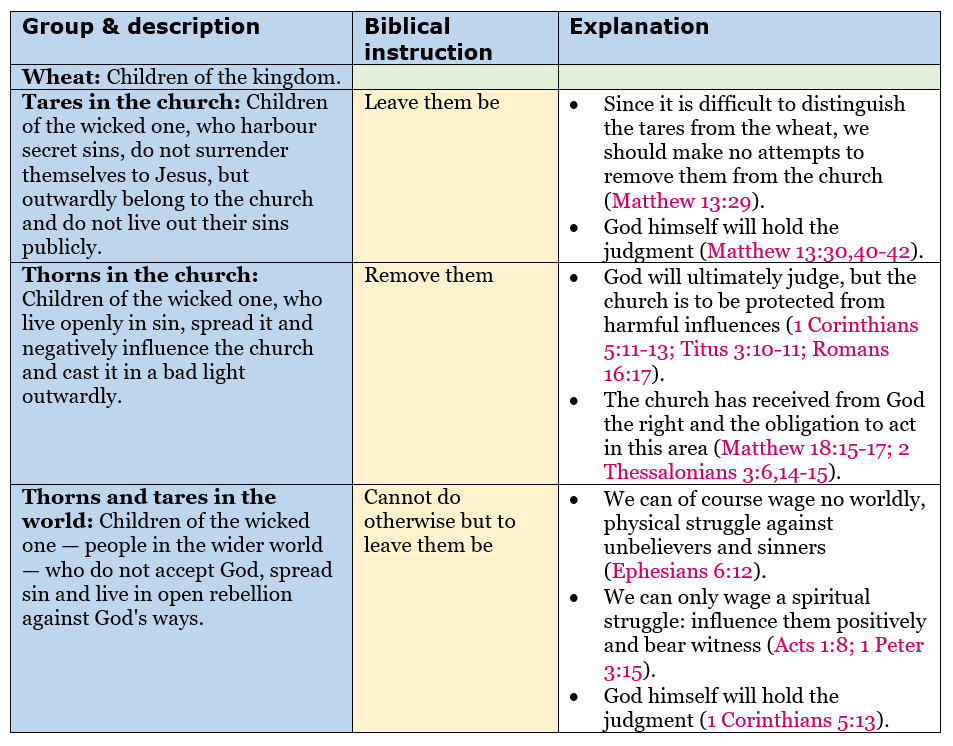
The following table sets out the description of the various groups as well as the biblical instructions for dealing with these groups — including corresponding Bible passages.
Information about the article
Bible version: Unless otherwise indicated, the King James Version (KJV) has been used for Bible citations. In non-biblical quotes (EGW, pioneers), also mostly the KJV is used.
Marking: Additions by the author are marked with curly brackets {}. Source references in EGW quotes have also been inserted in such brackets (the references correspond to the abbreviations of publications on www.egwwritings.org).
Note: Comments or additions by the author are marked as “Note” or “Remark.”